Quzhou Kingsoon Precision Machinery Co., Ltd.
News

How Are Cold Forging Parts Manufactured and Applied Across Industries?

2025-12-19

Article Abstract

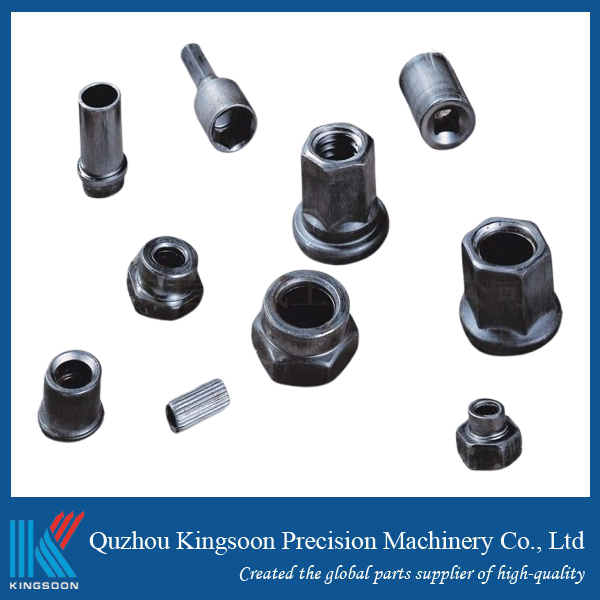
Cold Forging Parts are precision-engineered metal components produced through plastic deformation at or near room temperature. This article provides a comprehensive technical exploration of how Cold Forging Parts are manufactured, what parameters define their performance, and how they are applied across automotive, industrial, energy, and mechanical sectors. 

Cold Forging Parts


Table of Contents


Outline

  • Introduction to Cold Forging Parts
  • Manufacturing principles and material behavior
  • Technical specifications and parameters
  • Industrial applications and use cases
  • Common technical questions and answers
  • Supplier evaluation and quality control

1. How Do Cold Forging Parts Support Modern Manufacturing?

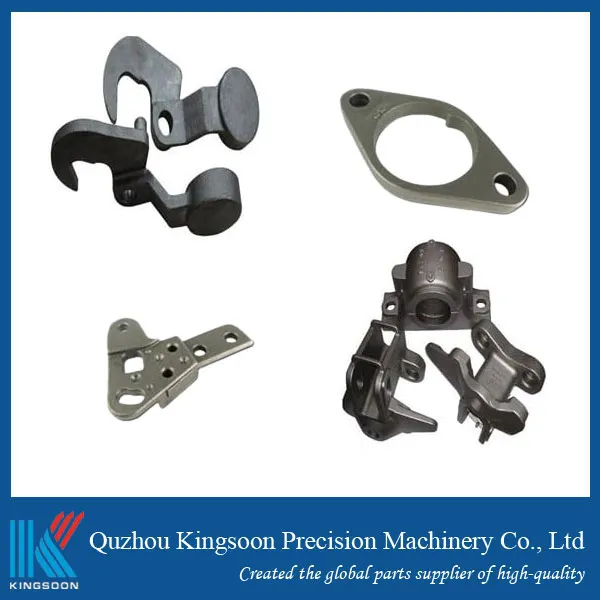
Cold Forging Parts refer to metal components formed through compressive force applied below the material’s recrystallization temperature. Unlike machining or hot forging, cold forging reshapes metal billets or wire rods through dies, resulting in near-net-shape components with enhanced mechanical properties.

The core manufacturing principle relies on controlled plastic deformation. Under high pressure, metal grain flow aligns with part geometry, improving fatigue resistance and structural integrity. This makes Cold Forging Parts suitable for high-load, high-precision applications where dimensional stability and repeatability are critical.

Industries increasingly adopt cold forging due to its material efficiency, reduced waste, and ability to support high-volume production without compromising consistency.


2. How Are Cold Forging Parts Defined by Technical Parameters?

The performance and applicability of Cold Forging Parts are determined by a combination of material selection, dimensional tolerance, surface condition, and mechanical properties. These parameters are established during tooling design and process validation stages.

Parameter Specification Range Technical Description
Material Types Carbon steel, alloy steel, stainless steel, aluminum, copper Selected based on strength, ductility, and corrosion resistance requirements
Dimensional Tolerance ±0.01 mm to ±0.05 mm Achieved through precision die design and controlled forming pressure
Surface Roughness Ra 0.8–3.2 μm Minimized through optimized lubrication and die polishing
Hardness Range HV 120–320 Influenced by work hardening during deformation
Production Volume 10,000 to 10 million units Supports mass production with stable quality output

These parameters allow Cold Forging Parts to meet international standards such as ISO, DIN, ASTM, and JIS, depending on end-use requirements.


3. How Are Cold Forging Parts Used Across Key Industries?

Cold Forging Parts are widely adopted across multiple industrial sectors due to their mechanical reliability and cost efficiency.

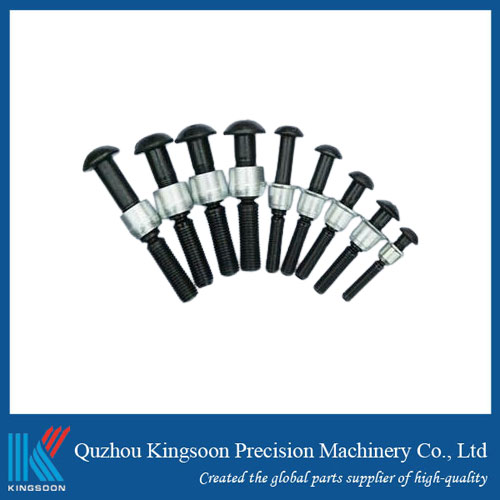
In the automotive industry, they are used in transmission shafts, fasteners, gear blanks, and steering components where fatigue resistance is essential.

In industrial machinery, Cold Forging Parts support load-bearing assemblies, hydraulic fittings, and drive system components requiring consistent dimensional accuracy.

Energy and power generation sectors utilize cold-forged connectors, couplings, and structural fasteners designed for long-term operational stability under variable loads.

Their adaptability also makes them suitable for emerging applications in automation equipment and precision mechanical assemblies.


Cold Forging Parts – Common Questions and Detailed Answers

Q: How does cold forging improve mechanical strength?
A: Cold forging enhances mechanical strength by aligning metal grain flow with the part geometry, resulting in increased tensile strength, improved fatigue life, and better resistance to stress concentration.

Q: How are tolerances controlled during cold forging?
A: Tolerances are controlled through precision-engineered dies, consistent material feedstock, controlled lubrication systems, and real-time monitoring of forming pressure and stroke.

Q: How do Cold Forging Parts compare to machined components?
A: Cold Forging Parts typically offer superior material utilization, improved mechanical properties, and reduced secondary processing compared to machined components, especially in high-volume production.


4. How Should Buyers Evaluate Cold Forging Parts?

Evaluating Cold Forging Parts requires a comprehensive review of supplier capabilities, quality assurance systems, and process transparency. Buyers should assess tooling design expertise, material traceability, and in-house testing capabilities.

Dimensional inspection, hardness testing, and microstructural analysis are commonly used to verify product consistency. Process documentation and compliance with international quality standards further support reliable sourcing decisions.

Long-term partnerships with experienced manufacturers help ensure stable supply, continuous improvement, and technical support throughout the product lifecycle.


Industry References

  • ASM International – Metal Forming Handbook
  • DIN Standards for Cold Forged Components
  • ISO 9001 Manufacturing Quality Systems

As a recognized supplier in the cold forging field, KINGSOON focuses on delivering Cold Forging Parts that align with strict engineering specifications and global manufacturing standards. Through continuous investment in tooling innovation and process optimization, KINGSOON supports diverse industrial applications with consistent quality and technical reliability.

For detailed technical consultation, specification review, or customized Cold Forging Parts solutions, contact us to engage with an experienced engineering and production support team.

Related News
icon
X
We use cookies to offer you a better browsing experience, analyze site traffic and personalize content. By using this site, you agree to our use of cookies. Privacy Policy
Reject Accept